DEALROOM
KoreInside
Project Overview
Observing difficulties across internal processes, I led a change using AI to optimize workflows across Sales, Engineering, Product, and Design.
Tags
Impact
- Current features uplift Pushing the whole platform into the new information architecture.
- AI-supported design Changed how the design team builds features, adopting rapid but consistent AI design.
- 40% client conversion from the branded prototype strategy.
- White-label codebase uplift Modernized the system behind client platforms with a Storybook strategy and controlled customization.
- Reduced internal team workloads Improved workflows across the teams involved.
- Less back-and-forth Minimized time spent on communication between teams.
Sales Prototypes
Context
Sales representatives used prototypes to show prospective clients the platform’s capabilities. They often asked designers to adjust prototypes to match a client’s website and brand. This work usually took a couple of days, but short deadlines led to rushed prototypes with missing links and gaps that interfered with sales.
Unorganized files, hindering the branding swap.
Employing AI to resolve the problem
I crafted master prototypes for each platform type, reusing feature modules to control iterations and remix fully working, prospect-branded prototypes.
The approach reduced preparation from two days to two hours, maintaining the sales momentum. Within four months, 40% of the prototypes created had converted into clients.
Storybook, consistency for future
Reimagining the architecture and adding a layer of control, able to scale for new lines of business
Background
Moving forward from the prototype solution, a challenge became clear: how could we control what AI generated and ensure consistency for current and new features, now that teams could explore features more easily? The platform’s original information architecture had lost hierarchy over time as new functions and actions were added. Its design system was not meeting the needs of this range of products.
Vision
My goal was to start a scalable strategy that would change how Kore builds its products. AI could power the work, but research was needed to establish the knowledge base and direction for the design system.
Current patterns
- The highest level was a choice between personal or company-based features.
- Some users could own multiple clients under company-based features.
- The loaded content level lacked hierarchy.
Current processes
- Different codebases were used for white-label client platforms and the Kore platform, increasing the time, cost, and effort needed to keep them consistent and up to date.
Uncover opportunities
- Assess where new scalable components could be included.
Solution
I started executing my vision by evolving the design system into a code based components storybook. It guided exploration and supported consistent AI generation through a configured Storybook skill. The standards established for control and consistency were:
- Components built on a token architecture to control white-label customization intentionally.
- A remodeled hierarchy to support new lines of business through a component named Shell.
- Hybrid components that cover multiple scenarios.
- Adaptive design readiness.
Shell
The Shell is the main architectural structure, carrying hierarchy levels, access points, responsive behavior, and interaction logic.
Wizard
The Wizard is a multi-step task flow with full-screen and overlay versions that share the same inner structure. It can support different tasks, including resolving multiple compliance requirements after login, replacing the many pop-ups that interrupt users.
The multi-step wizard hold all current pendencies
White-labels layout
Client platforms share and integrate features with the main back end. I reused the Shell’s Content Level 2 anatomy, carrying its rules and logic into white-labels to keep the main platform and client platforms in sync.
DealRoom, the debt
Allow companies to start the offering setup themselves, reducing back-and-forth with Customer Service and Engineering.
Project Overview
KoreInside is an ecosystem for private markets, a compliance-first environment for multiple client profiles. DealRoom is where a new offering comes to life through the issuance process.
Debt
When a company wants to raise capital, the information gathering and offering setup are handled manually by an internal engineer and a Client Success agent. This can take several days or weeks, with many back-and-forth emails.
Goal
Enable companies to configure the offering themselves.
AI-first approach
With Storybook available, it became faster to build, review, and refine flows internally through workshop recordings and AI skills, while ensuring consistency.
Design challenge
Guide companies through all regulatory information required to start an offering. The volume of information, often uploaded by different agents working in the same environment, makes DealRoom challenging.
Solution
Centralize the most crucial forms in the full Wizard component for a focused experience.
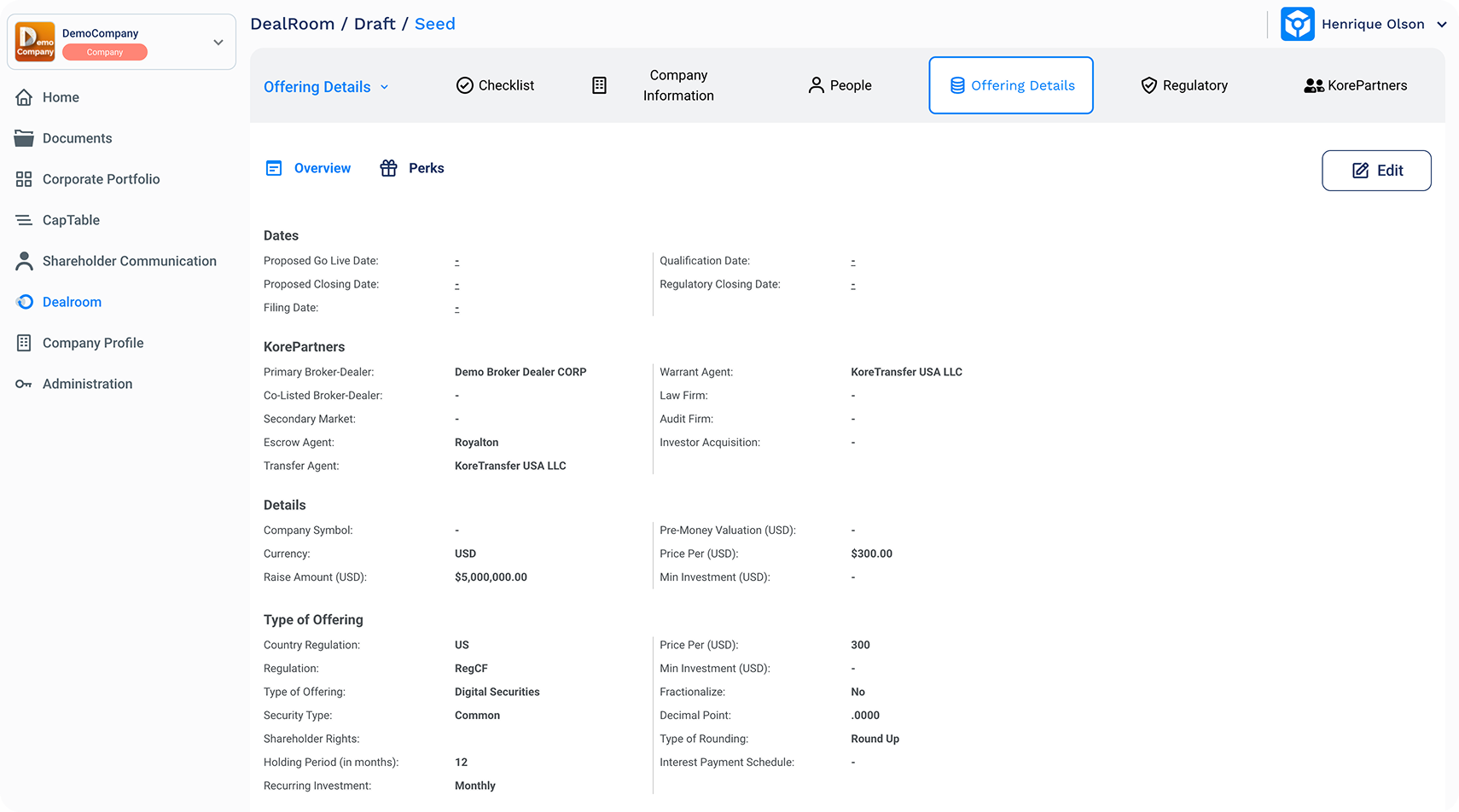
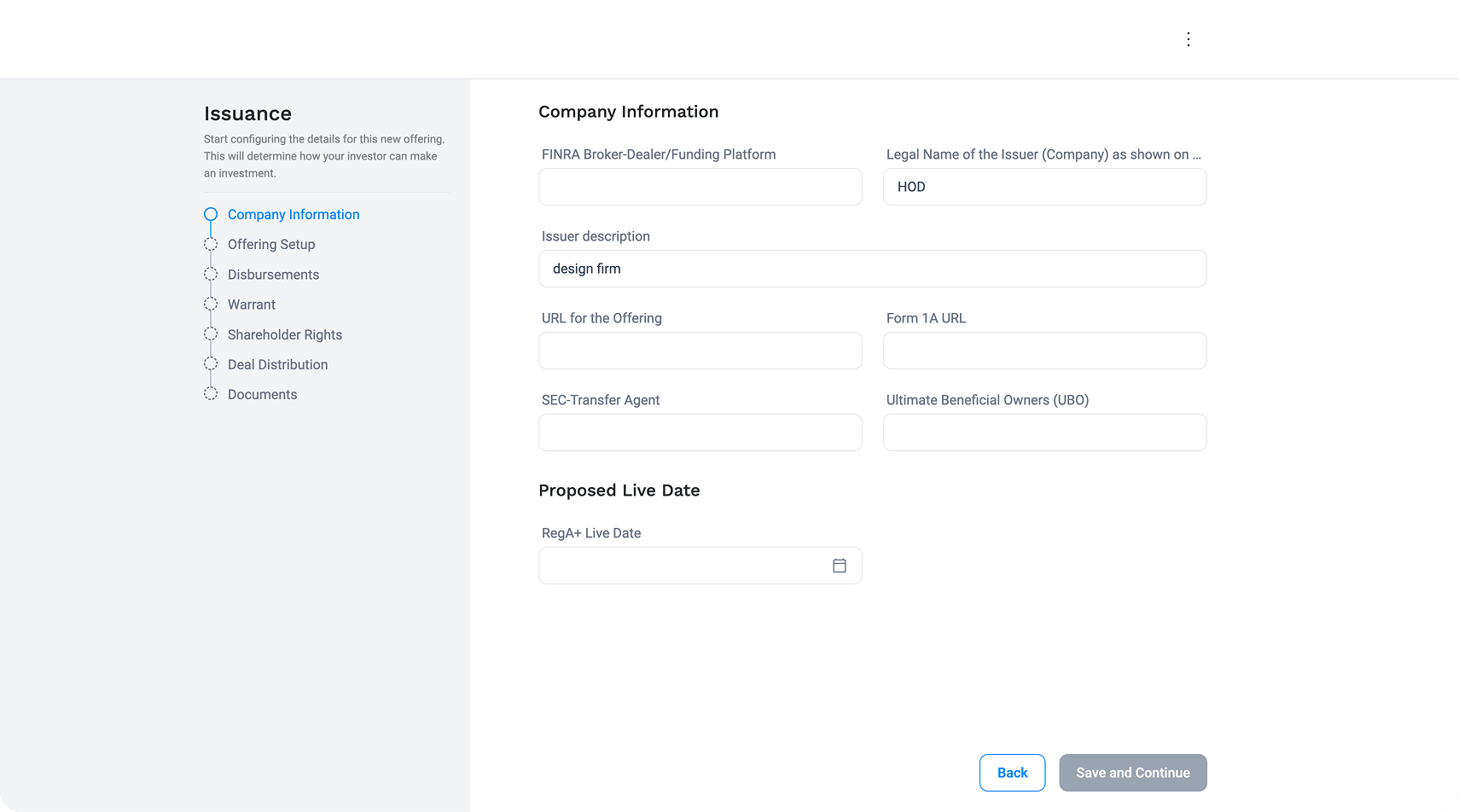
Visually efficient recognition of information that is still required. Visibility into the minimum required completion. Content arrangement that saves space.
Content rearrangement into new added components.